Retired Midwife Reveals a 7-Day Intimate Care Method That Helps Women Better Understand Vaginal Odour and Build Safer Intimate Hygiene Habits

Can I Ask You Something Personal?
Have you ever noticed a change in your intimate odour and immediately started wondering what it meant?
Maybe you were getting ready for work when you noticed it.
Or perhaps you were preparing to meet your partner and suddenly became self-conscious.
You checked your underwear.
You washed again.
Then you wondered, “Can somebody else notice this?”
That thought alone can make you uncomfortable.
And if you are in a relationship, the worry can become even bigger.
“What if my partner notices?”
“What if he thinks I don't take care of myself?”
“Why is this happening when I bathe properly?”
You may have tried changing soaps.
You may have bought feminine washes because somebody said they were better.
You may have followed advice from a friend, an auntie, a social-media vendor or an older woman in your family.
Perhaps you have even tried something traditional because you were told, “This is what women have always used.”
And yet the uncertainty remains.
The frustrating part is that intimate health is one of those subjects people rarely discuss openly.
You can talk about your hair.
Your skin.
Your weight.
But when the conversation turns to vaginal odour or intimate discomfort, the room suddenly becomes quiet.
So you search privately.
You read one article.
Then another.
Then somebody on Instagram recommends a completely different solution.
Now you are even more confused.
And perhaps the biggest question is not even, “How do I make the smell go away?”
It is:
“How do I know what is normal, what I should stop doing, and when I actually need professional help?”
If that question sounds familiar, stay with me.
Because I want to tell you about a conversation that completely changed the way I thought about intimate care.
Drop everything you are doing now and listen to every word I’m about to say.
Because I’m about to share with you a simple 7-day system that changed everything for me.
The Advice I Wish More Women Heard Earlier
Some lessons don't arrive in a clinic.
They come during quiet conversations between women.
They come from mothers, aunties, grandmothers and community health workers who have watched generations of women make the same mistakes.
But there is an important difference between respecting traditional knowledge and blindly putting something inside or around a sensitive part of your body.
That distinction became very important to me.
Hi, my name is Dr. Chiamaka Okafor.
And first thing you should know about me is that this page is an educational story built around a women's-health persona. I am not presenting myself as your personal doctor, and this guide is not a substitute for medical diagnosis or treatment.
What I wanted to create was something many women rarely get: a simple way to understand intimate-care habits, separate useful information from internet myths, and recognize when a symptom deserves professional attention.
That journey began with Mama Ngozi.

What Happened Before I Found A Better Way
I did not wake up one morning and decide to become interested in intimate wellness.
It started quietly.
Like many women, I assumed that if I bathed properly and used the right products, everything would automatically be fine.
Then I noticed a change in my intimate odour.
It wasn't something I could easily describe.
And that was exactly what made it frightening.
I kept thinking, “Maybe I'm imagining it.”
Then I would notice it again.
After childbirth, changes in my routine and my body made me pay even more attention to intimate health. I was tired, busy and trying to balance family responsibilities with work.
But the more worried I became, the more complicated my routine became.
I started believing that more products meant better care.
That was my first mistake.
I bought strongly scented feminine washes.
I changed soaps.
I washed more often.
I listened to friends recommending different herbal mixtures.
I watched social-media videos where women confidently explained their own routines.
Each recommendation sounded convincing for about five minutes.
Then another person would say the exact opposite.
Eventually, I became tired of thinking about it.
But the emotional cost was worse than the inconvenience.
I became conscious of intimacy.
I would wonder whether my partner had noticed something before I had.
Sometimes I pulled away emotionally because I was worried that physical closeness would expose the thing I was trying to hide.
There were evenings when I would lie beside my partner and think, “Please don't let him notice anything.”
That thought stayed with me.
And the more I worried, the less confident I felt.
One evening, after I had changed products yet again, my partner asked me a simple question.
“Why are you so worried about this?”
I didn't know what to say.
I felt embarrassed.
So I brushed the conversation aside.
That was the breaking point.
Not because he had said something cruel.
He hadn't.
It was because I realized how much mental space this small question had started occupying in my life.
A few days later, I called an older woman in my family.
She listened without laughing.
Then she said something I still remember:
That sentence stayed in my mind.
So I began looking at everything I had been doing.
First, the scented feminine washes.
I had assumed that a stronger fragrance meant better freshness. But a product that simply masks odour does not explain why the odour changed in the first place. Some fragranced products can also irritate sensitive skin.
Second, frequent washing.
I thought washing more often would solve the problem. Instead, I realized that intimate care is not about endlessly scrubbing or trying to make the body smell like perfume.
Third, random herbal mixtures.
This one was difficult because the recommendations came from people I trusted. But “natural” does not automatically mean safe, and I didn't know the ingredients, preparation, concentration or possible interactions.
Fourth, vaginal steaming.
I had seen people online describe it as an ancient feminine ritual. But the more I learned, the more uncomfortable I became with the idea of exposing sensitive tissue to excessive heat or unknown substances.
Fifth, intimate detox products.
The advertisements were persuasive. The language was confident. But confidence in an advertisement is not evidence that the product is appropriate.
Sixth, constantly changing products.
Every few days there was something new. A new soap. A new wash. A new mixture. A new “secret.” I was changing too many things to know what was helping or irritating me.
Then came the conversation that changed everything.
I was visiting relatives in Awka when several women gathered after a family event.
Someone brought up feminine hygiene.
Another woman mentioned a traditional remedy.
Someone else mentioned a popular feminine wash.
Mama Ngozi Eze was sitting quietly nearby.
She was 68 at the time and had spent decades working as a community midwife.
She didn't interrupt anyone.
She just listened.
Finally, she smiled and said:
Everyone laughed.
Then she became serious.
I remember sitting there thinking, “So what should I actually do?”
She explained her simple framework.
First: understand the change.
Second: simplify everyday external care.
Third: remove unnecessary irritants.
Fourth: observe what happens.
Fifth: know the warning signs that mean you should stop experimenting and seek professional evaluation.
It sounded almost stupidly simple.
I actually told her that.
“Mama, that's all?”
She laughed.
I didn't immediately believe it would make much difference.
But I decided to follow the framework for seven days.
Day one was mostly observation.
I wrote down what I was using.
I looked at my washing routine.
I stopped adding unnecessary products.
Day two felt exactly the same.
Day three, I started wondering whether I was wasting my time.
“Maybe this is too simple.”
But I kept going.
By day four, something important had happened.
I wasn't constantly thinking about the problem anymore.
That might sound small.
For me, it wasn't.
I had spent so much time checking, washing, worrying and second-guessing myself that simply having a clear routine felt like relief.
By day seven, I felt more confident in my understanding of my own intimate-care habits.
And I also understood something even more important:
If an unusual odour comes with other symptoms or persists, the answer is not necessarily another home remedy.
That realization changed the whole purpose of the routine for me.
It wasn't about pretending every intimate-health problem could be solved at home.
It was about knowing what I could safely control — and knowing when I needed professional help.
Then came the real test.
My partner noticed that I seemed more relaxed.
He looked at me and said:
That was the moment I realized the biggest change wasn't simply what I had done differently.
It was how I felt.
I no longer felt like I had to chase every new product or secret remedy.
I had a framework.
And when I returned to the family gathering, I discovered that I wasn't the only woman who had struggled with this confusion.
One woman told me she had spent months changing soaps because she thought stronger fragrance meant better hygiene.
Another said she had been buying random online “detox” products because she was too embarrassed to ask a healthcare professional.
A third woman said her biggest relief was simply learning that she didn't have to keep putting different products on sensitive skin just because someone called them “natural.”
These conversations made one thing very clear to me.
Women don't necessarily need another sensational promise.
Sometimes they need clear information.
They need someone to explain the difference between normal variation, everyday care, possible warning signs and situations that deserve professional evaluation.
And that is why I decided to put the framework into a guide.
Introducing The Guide
I started getting too many questions about the same things.
“What should I stop using?”
“What should my daily routine look like?”
“How do I know when something is not normal?”
“What about traditional remedies?”
“What should I watch for?”
I couldn't answer everyone individually.
So I put everything — the full 7-day routine, the daily checklist, the questions to ask yourself, the things to rethink, and the warning signs — inside one simple guide.
Introducing...
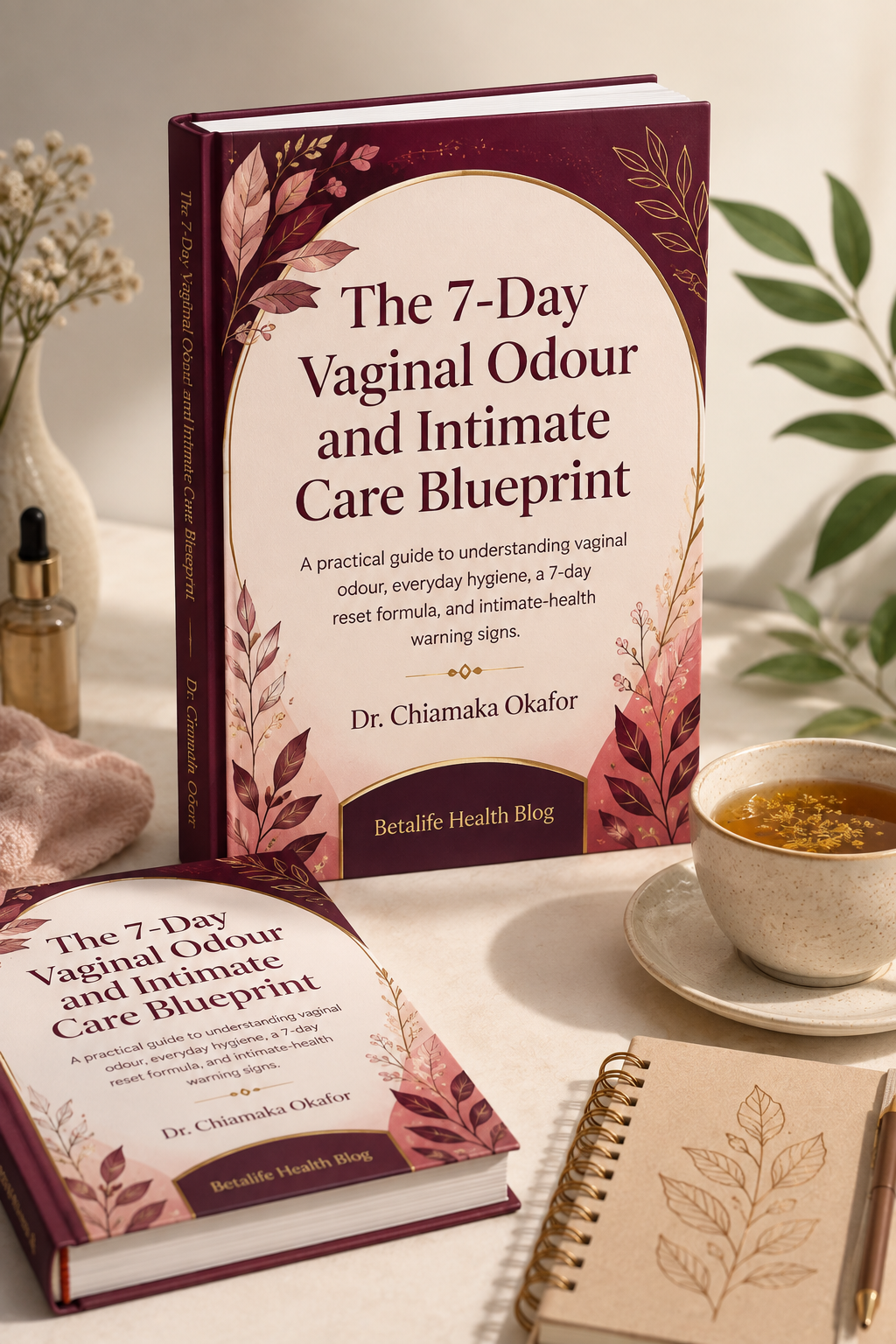
Inside This E-Guide, You’ll Discover:
Inside this e-guide, you’ll discover:
- Understanding Vaginal Odour: What's Normal and What Isn't — Pg. 4
Learn why odour can naturally vary and which changes deserve closer attention. - 7 Common Intimate-Care Mistakes Women Make — Pg. 9
Identify everyday habits that may be unnecessary, irritating or simply based on myths. - The 7-Day Intimate Care Reset Formula — Pg. 14
Follow a simple day-by-day routine designed to help you simplify your personal-care habits. - Products, Fragrances & Practices to Rethink — Pg. 22
Understand why “more products” does not automatically mean better intimate care. - The Intimate Care Daily Checklist — Pg. 27
A practical reference you can use to keep your routine consistent. - Warning Signs You Shouldn't Ignore — Pg. 31
Learn when unusual odour or accompanying symptoms should prompt professional medical evaluation. - Traditional Remedies: What to Question Before Trying Them — Pg. 36
Use a safety-first checklist before trying herbs, mixtures, steaming or other traditional practices.
And the best part? You don’t need to keep buying product after product, or endlessly change your routine, or experiment with every remedy somebody recommends. It’s a simple educational framework designed to help you make more informed intimate-care decisions.
Just So You Know...
Putting this Guide in an Easy-To-Read Format Cost Me Over ₦120,000.
Creating a useful guide takes more than typing a few pages.
- Research and content development — time spent organizing the educational material.
- Editing — making the information clear and easy to follow.
- Safety review and fact-checking — checking that the guide does not encourage unsafe intimate practices.
- Design and formatting — turning the material into a readable PDF.
- Website and delivery setup — preparing the product for digital delivery and customer access.
The Price Descent
I'm not going to charge you ₦120,000.
I won't even charge you ₦60,000.
Not even ₦30,000.
In fact, you won't even pay the ₦29,800 anchor price.
A fair price for the guide would be ₦29,800.
One-time digital access
This Discounted Offer is ONLY For the First 50 buyers so Hurry!
Your current 2-hour offer window is shown above.
WAIT! I Have a FREE Gift For You...
If you're among the first 50 buyers, you'll also receive these bonuses alongside your package.
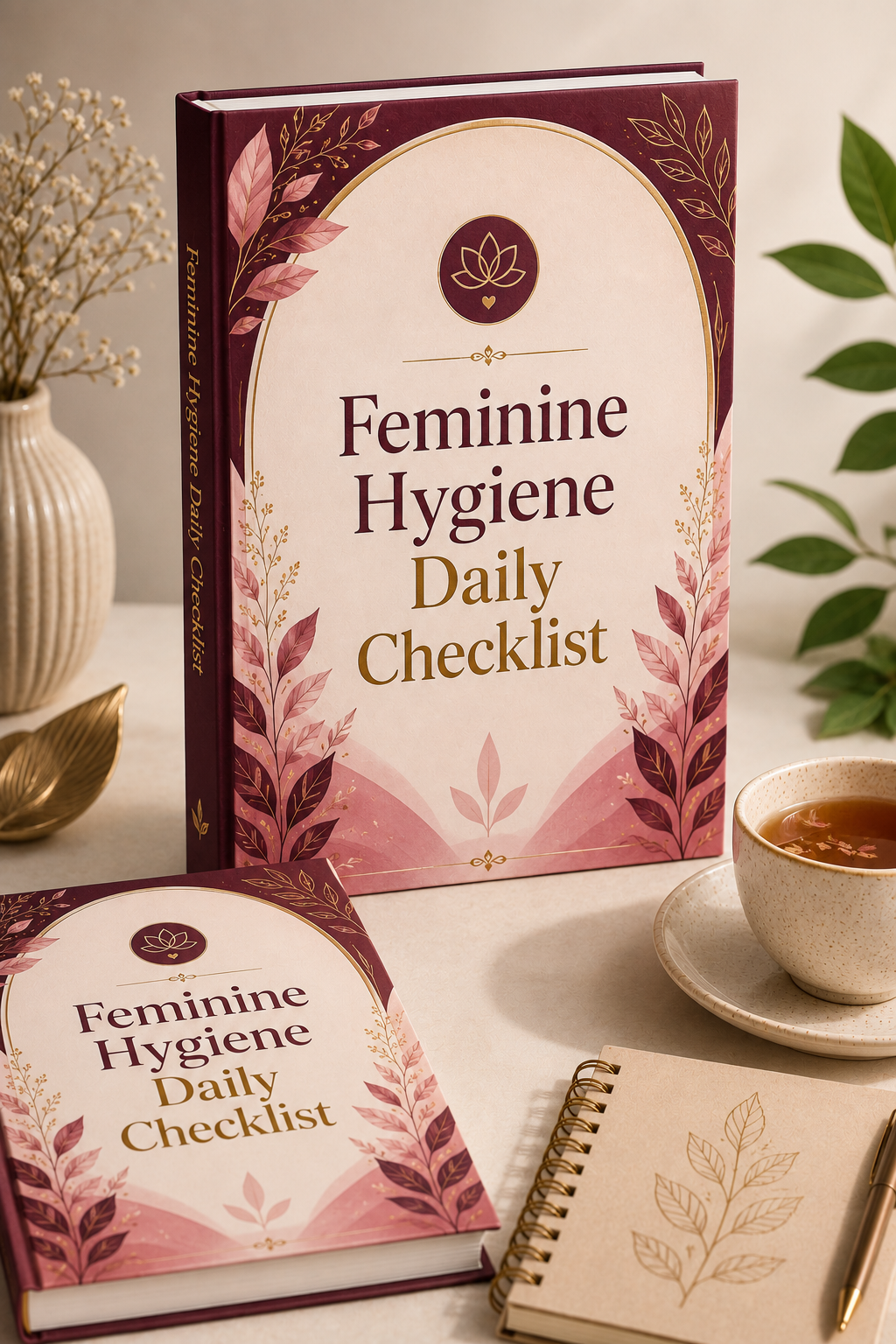
Bonus 1: Feminine Hygiene Daily Checklist
A printable reference for maintaining consistent everyday intimate-care habits.
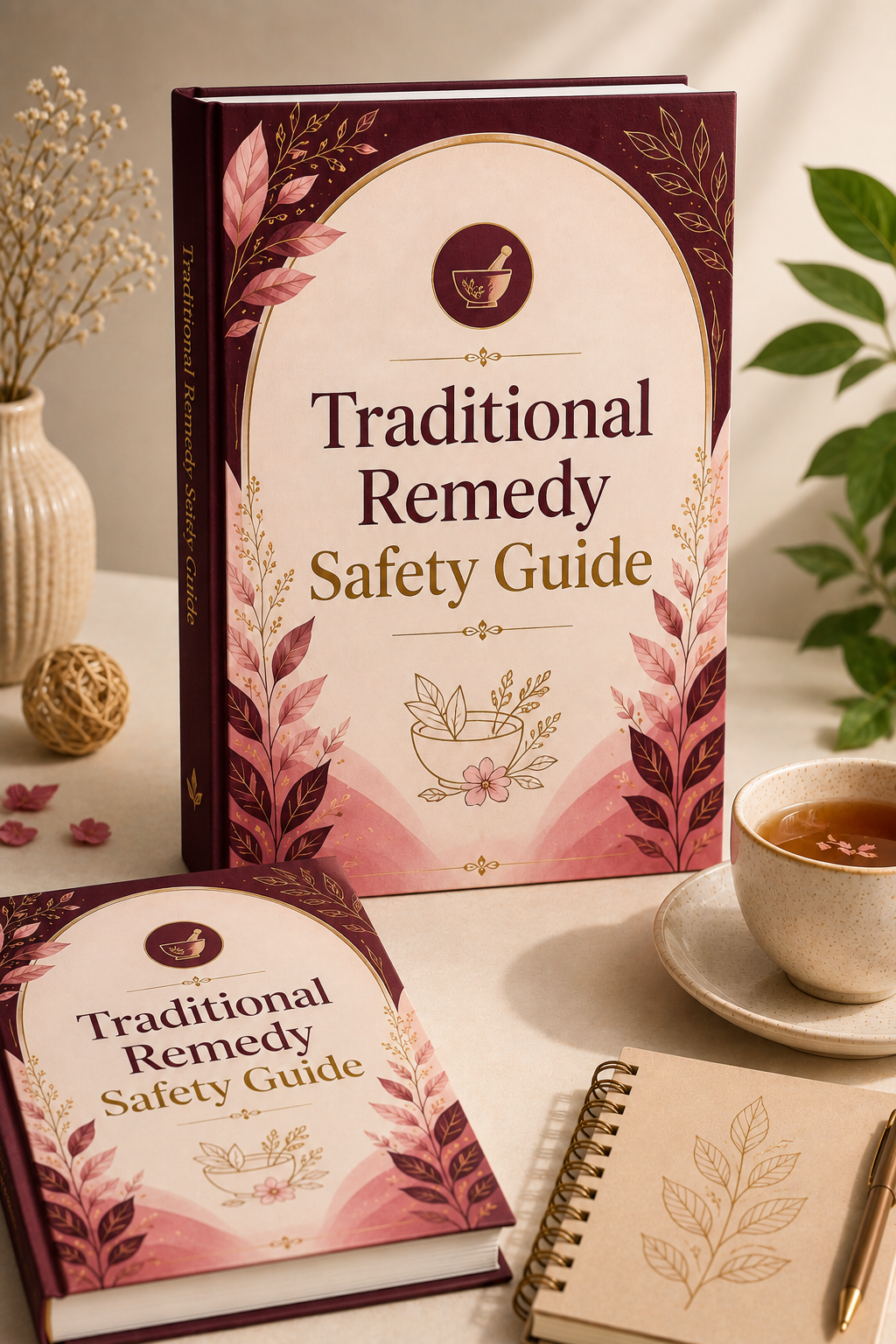
Bonus 2: Traditional Remedy Safety Guide for Women
A practical checklist of questions to consider before trying herbs, mixtures or other traditional intimate-care practices.
People Are Already Taking The Next Step
DEMO PREVIEW — these payment notifications are sample entries added so you can see how the finished sales page looks. Replace them with genuine, consent-based customer/order notifications before publishing.
This special introductory offer is available for a limited time. When the timer reaches zero, the 7-day offer window resets.
Bear in mind, you're not the only one viewing this website right now.
Get The Blueprint + Bonuses NowStill Feeling Unsure?
I totally understand. Which is why I'm making this a simple, low-risk decision:
7-Day Satisfaction Guarantee
Read the guide and work through its educational material. If you decide within 7 days that the guide isn't right for you, you can request a refund according to the seller's stated refund terms.
The guide is educational and does not guarantee treatment, cure or a particular medical outcome.
More Women Are Choosing Clarity
Illustrative placeholders only. Replace with genuine customer testimonials obtained with permission.
“The biggest thing for me was learning to stop jumping from one product to another. It is much easier now to follow a simple routine.”
“Honestly, I had so many questions. This guide helped me know which things are worth discussing with a professional instead of guessing.”
“No long grammar. Everything is broken down. I especially liked the daily checklist.”
“This is the type of private information women need. I wish someone had explained these things earlier.”
“I stopped trying every random thing I saw online. That alone gave me peace of mind.”
You Have Two Choices
Option 1: Take action. Get The 7-Day Vaginal Odour and Intimate Care Blueprint, work through the 7-day educational routine, review your intimate-care habits and learn the warning signs that should not be ignored.
Option 2: Close this page and keep running from one product to another, trying whatever someone recommends online, or worrying in silence because you're too embarrassed to ask questions.
Maybe you were meant to see this page today.
Maybe the most useful thing you can do is simply become better informed.
The clock is ticking.
Educational product. Not a diagnosis or treatment. If you have persistent unusual odour or symptoms such as pain, itching, sores, bleeding, fever or unusual discharge, seek advice from a qualified healthcare professional.
Real Women. Real Experiences
I really liked how simple the guide is. I had been changing products anyhow. This one helped me slow down and understand my routine better.
“I no longer feel like I must try every recommendation I see online.” The warning-sign section was especially useful for me.
Chai, I wish I read something like this earlier. It made me understand that natural does not always mean automatically safe.
Very easy to read. The checklist is what I use most. E don help me organize my routine without overthinking everything.
I like that it doesn't promise miracle treatment. It explains what you can do and when you should see a professional. That gave me confidence.
WhatsApp Customer Feedback
Share Your Experience
Decorative form for the page design. Connect it to your preferred form system before publishing.